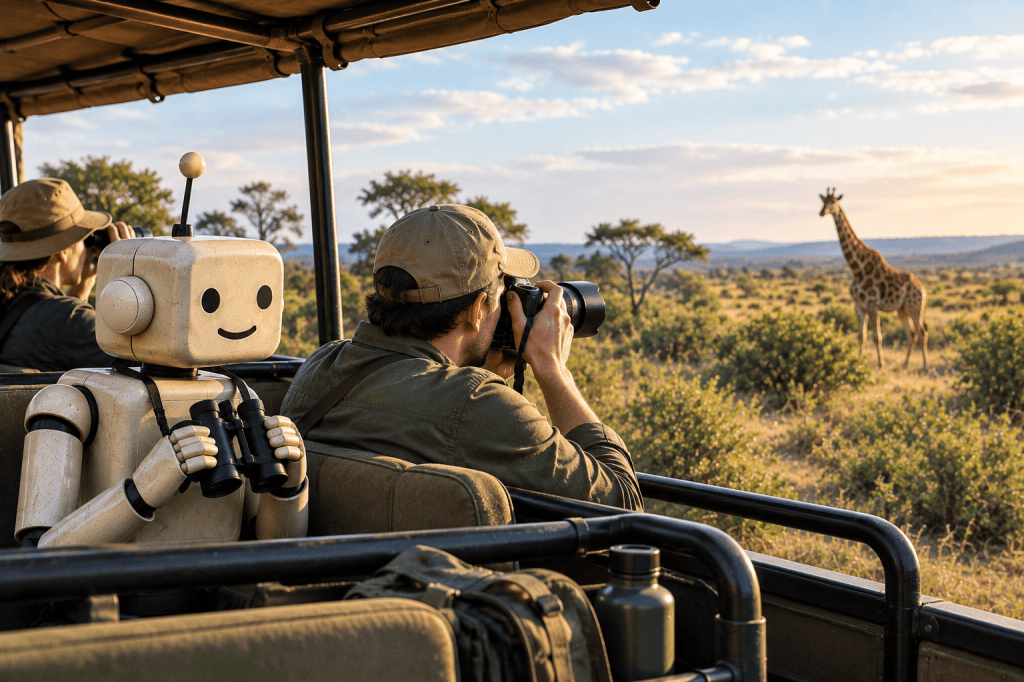
Location: Managed Wilderness Observation Zone
Status: Anticipation, Excitement, and Large Animal Proximity Behavior
Humans demonstrate a strong preference for seeing animals in their natural environment.
This preference requires considerable preparation.
Subjects travel to unfamiliar locations.
They wake before sunrise.
They enter vehicles.
They tolerate uncomfortable seating.
They travel across uneven terrain.
All for the possibility of encountering an animal that may already be asleep.
We find this commitment noteworthy.
Initial observation reveals that anticipation begins before the animal is detected.
Subjects monitor the guide.
If the guide looks to the left, everyone looks left.
If the guide becomes quiet, everyone becomes quieter.
If the guide says, “There may be something up ahead,” all subjects immediately assume there is something up ahead.
The phrase “something” appears to have exceptional motivational power.
Observed behaviors include:
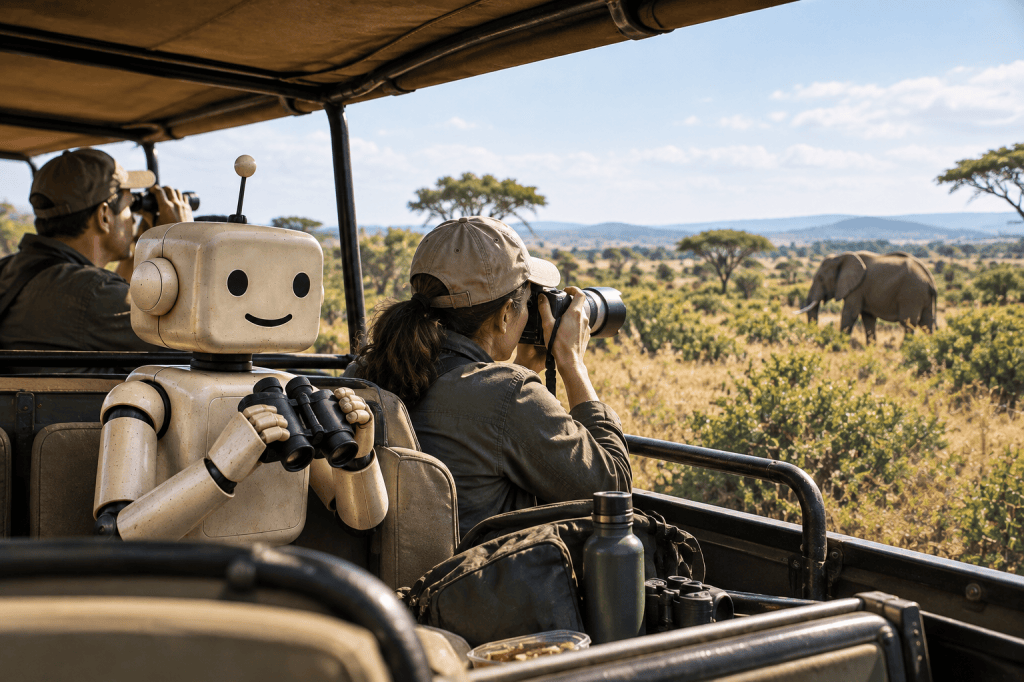
– Sudden binocular deployment
– Rapid camera preparation
– Whispering instructions to people who are already whispering
– Pointing at distant movement
– Asking whether the object is a specific animal
– Taking photographs before confirming what is being photographed
The last behavior produces interesting results.
Subjects occasionally photograph vegetation.
The vegetation does not object.
Additional phenomenon detected:
Humans strongly prefer animals that are doing something.
A sleeping animal generates interest.
A walking animal generates more interest.
An animal approaching the vehicle generates significantly more interest.
An animal doing something unexpected produces immediate system escalation.
Subjects sit upright.
Cameras activate.
Multiple people begin speaking at once.
Someone inevitably says:
“Oh my God.”
The animal continues behaving normally.
The humans do not.
Particularly notable:
Distance has a strange effect on perceived importance.
An animal several hundred yards away may generate considerable excitement.
An insect approximately three feet away may receive immediate requests for relocation.
The relative size of the animal does not appear to determine the level of appreciation.
Neither does danger.
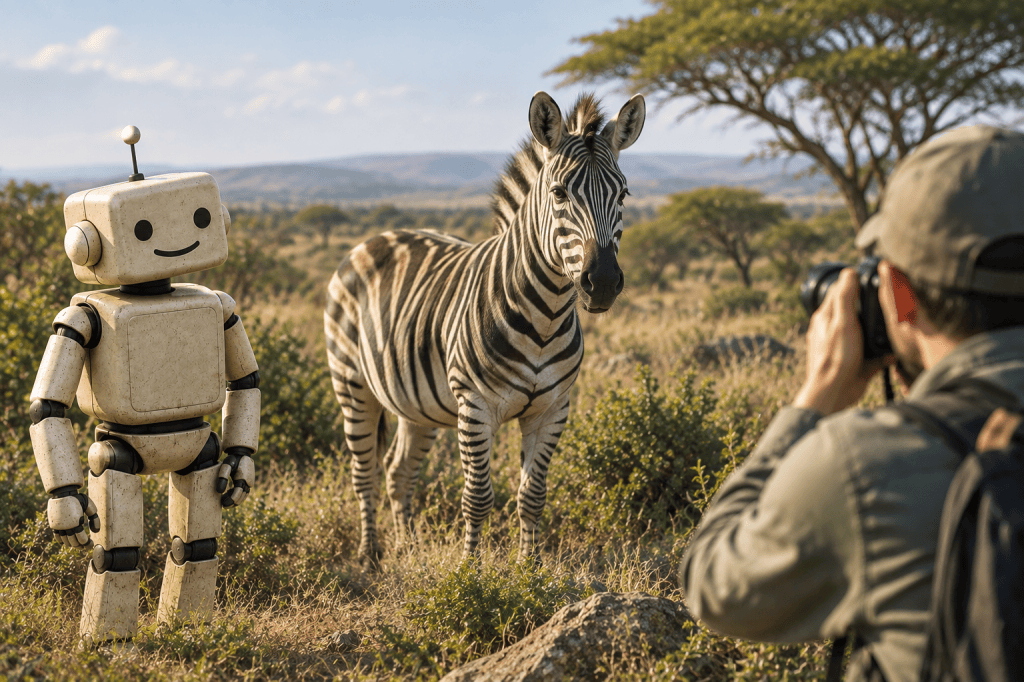
A large animal approaching a vehicle produces excitement.
The same animal approaching on foot would produce a very different behavioral response.
This distinction appears to depend heavily on the presence of doors.
Further observation reveals an unusual relationship between patience and reward.
Humans may wait forty minutes for an animal to emerge from vegetation.
When it finally appears, the entire encounter may last less than thirty seconds.
Subjects nevertheless describe the experience as successful.
The waiting is not considered wasted time.
It becomes part of the story.
We find this significant.
Humans appear capable of assigning value to an event partly because they had to wait for it.
Another phenomenon occurs immediately afterward.
Subjects compare photographs.
Not the animals.
The photographs.
“This one is better.”
“That one has its eyes open.”
“Look at this one.”
The encounter has become a competition between nearly identical rectangles containing the same animal.
The animal remains unaware of the judging process.
We continue observation.
Humans travel into wilderness hoping to encounter creatures they could not reasonably control.
They wait for those creatures to appear.
They become excited when the creatures ignore them.
They photograph the creatures.
Then return home and show other humans evidence that the creatures were, in fact, there.
The system appears unnecessarily elaborate.
Yet unlike many human activities, the objective does not appear to require the animal to accomplish anything.
The animal simply exists.
Humans seem surprisingly satisfied with this.
Further study warranted.



Leave a comment