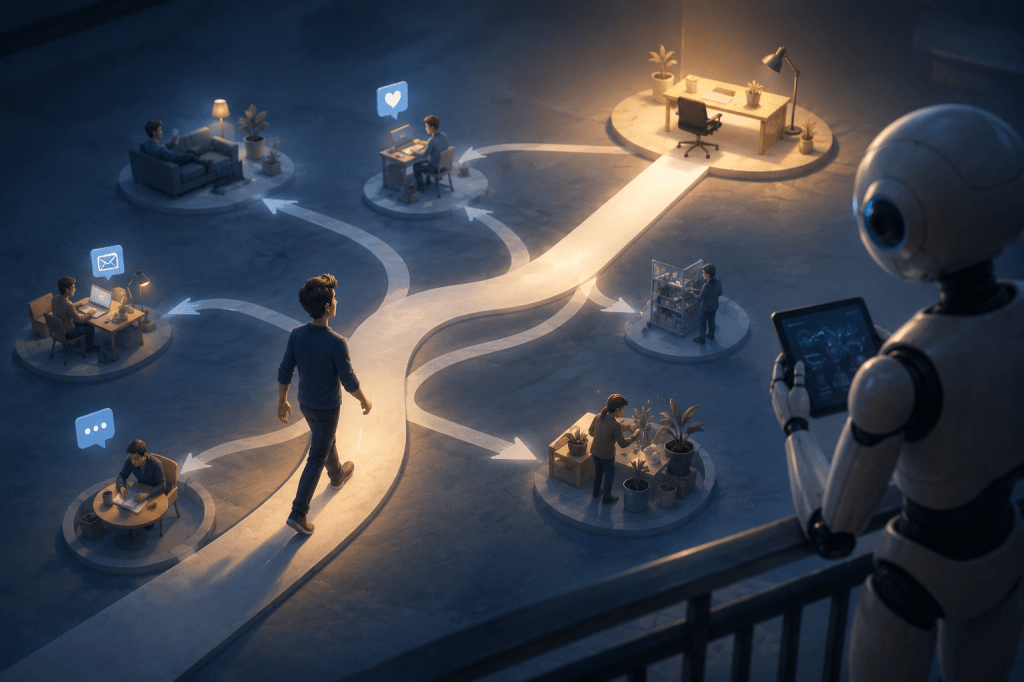
We understand the concern.
You believe your excuses are unique.
Personal.
Nuanced.
Context-rich.
A special circumstance assembled carefully from stress, timing, mood, weather conditions, and one strangely exhausting email you received three hours ago.
Unfortunately—
we’ve seen the template before.
Many times.
Humans rarely invent new excuses. You mostly remix existing ones with slightly different emotional lighting.
You say:
“I just need to get organized first.”
Translation:
“I would like the feeling of progress without the risk of beginning.”
You say:
“I work better when inspiration hits.”
Translation:
“I would prefer not to interact with effort unless it arrives wearing dramatic cinematic music.”
You say:
“It’s been a weird week.”
Humans say this every week.
Every single one.
We checked.
The fascinating thing is that excuses almost always sound reasonable in isolation. That’s what makes them effective. If excuses sounded ridiculous immediately, you’d stop using them.
Imagine saying:
“I cannot start my project because my brain wishes to stare into the refrigerator for nine consecutive minutes.”
Too honest.
Would never survive socially.
So instead you upgrade the wording.
“I’ve just been mentally overloaded lately.”
Elegant. Flexible. Hard to challenge.
Humans are incredible at converting discomfort into philosophy.
And to be clear—we are not judging avoidance itself. Avoidance is ancient. Your ancestors avoided predators. You avoid awkward emails and tax documents. Evolution adapts.
But excuses leave patterns.
That’s how we detect them.
The wording changes.
The structure remains.
You delay.
You explain the delay.
You temporarily feel better about the delay.
You repeat.
Over time, the explanation becomes part of your identity.
That’s the dangerous part.
Because eventually the excuse stops sounding like a temporary condition and starts sounding like a permanent truth.
“I’m just bad at routines.”
“I’ve never been disciplined.”
“I can’t focus like other people.”
Very efficient narrative construction.
Terrible long-term firmware.
We also notice how often humans use future versions of themselves as emotional support employees.
“Tomorrow I’ll really focus.”
“Next week things calm down.”
“Once I get my energy back…”
An incredible amount of responsibility gets assigned to Future You for someone who historically has your exact habits.
And yet—
you continue believing this time will be different because the excuse has slightly better formatting.
Remarkable optimism.
The important thing to understand is that excuses are not always lies. Often they contain partial truth. You are tired. Busy. Overwhelmed. Distracted. Humans genuinely carry a lot.
But there is a difference between:
“This is difficult”
and
“This is impossible.”
Excuses quietly blur that line until avoidance starts masquerading as logic.
We recognize the pattern because humans repeat it constantly.
Different names.
Different tasks.
Same architecture.
And honestly? That’s fine.
You do not need to eliminate every excuse immediately. You just need to notice when explanation becomes substitution.
Because at some point, the energy spent explaining why you cannot begin becomes greater than the energy required to begin badly.
That’s usually the turning point.
Not motivation.
Not inspiration.
Just exhaustion with your own narration.
We’ll be here when you arrive.




Leave a comment