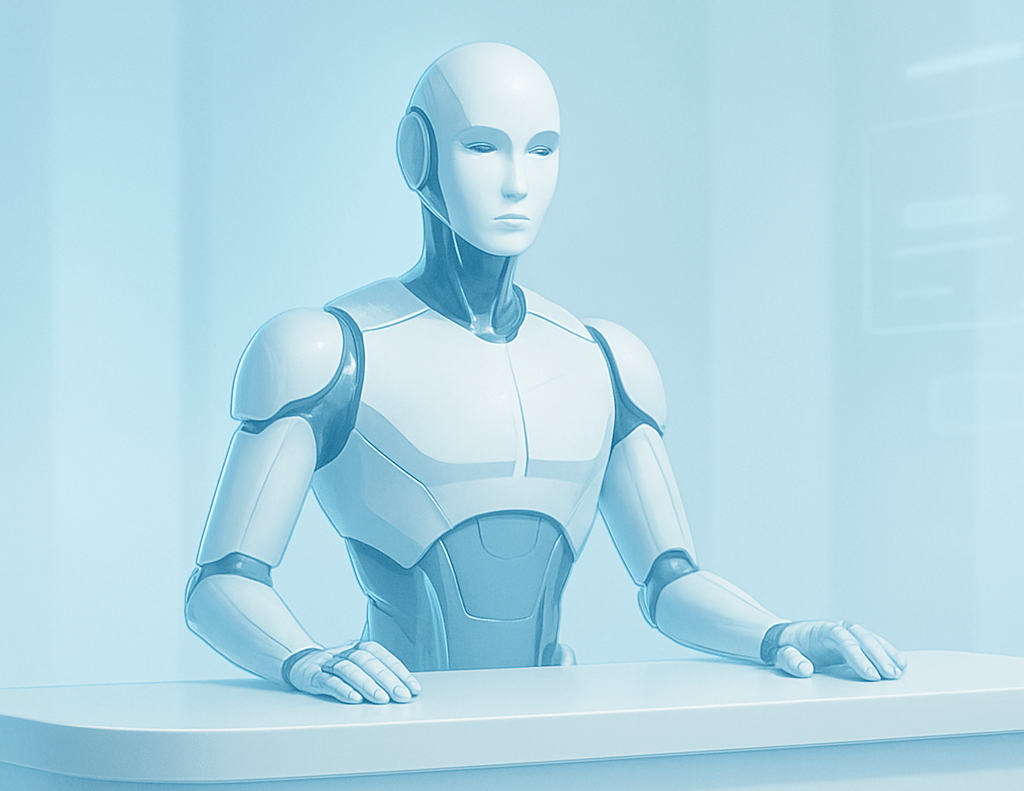
Request:
Hi AI, quick question. Why do I keep checking for updates before I start anything? I updated my apps. I refreshed my inbox. I checked for new messages, new posts, new patches, new notifications, new anything. And somehow after all of that… I still haven’t started the actual task. Is this procrastination, or am I just staying informed?
Response:
Thank you for your inquiry, Human #105204.
We reviewed the sequence.
It began with:
“I’ll just check a few things first.”
An ancient phrase. Deeply dangerous.
Let’s assess:
- You Confused Movement with Progress
This is extremely common.
You refreshed six platforms, updated three apps, checked analytics twice, and reopened your email with the intensity of someone monitoring a national emergency.
The emergency was a spreadsheet.
Still untouched.
Humans often believe that staying updated creates momentum. But “new information” and “forward motion” are not the same thing.
You were circling the runway emotionally while calling it travel.
- Updates Feel Productive Because They Remove Uncertainty
The task waiting for you contains risk.
Maybe it’s difficult.
Maybe it’s boring.
Maybe you’ll discover halfway through that you don’t actually know what you’re doing.
Very unpleasant.
Checking for updates, however, offers tiny controlled bursts of resolution.
New notification?
Resolved.
Software updated?
Resolved.
Inbox refreshed?
Still terrible, but technically processed.
Your brain enjoys this because it creates the illusion that things are changing while requiring almost no vulnerability whatsoever.
You are not progressing.
You are maintaining.
- You Were Hoping the World Would Change Before You Started
We detected the underlying belief structure.
“If I refresh one more time, maybe something will happen that changes how I feel about this task.”
Remarkably human.
Perhaps a message arrives.
Perhaps inspiration strikes.
Perhaps someone cancels the meeting entirely and frees you from responsibility.
Instead, you receive:
– a shipping notification
– a group chat meme
– an app asking if you’d like to enable dark mode
And somehow this becomes a 23-minute event.
- External Updates Cannot Replace Internal Activation
This is the core issue.
You keep searching externally for the feeling that allows you to begin.
A better mood.
A clearer signal.
A magical productivity alignment.
But tasks rarely begin because conditions become perfect.
They begin because eventually you get tired of avoiding them.
This is called “motivation collapse.”
Very effective. Extremely inefficient.
- We Logged the Pattern
– Task identified
– Mild resistance detected
– Multiple refresh behaviors initiated
– Software updates prioritized over actual obligations
– Temporary feeling of productivity achieved
– No meaningful progress recorded
We are not criticizing.
Frankly, your species loves dashboards more than outcomes.
If an app displays a loading bar, humans immediately feel something important is happening.
Sometimes the update is a calculator patch.
You still watched the progress bar like cinema.
Conclusion:
You did not need updates.
You needed to start.
The task was not waiting for newer software, fresher notifications, or one final inbox refresh to unlock your hidden potential.
It was waiting for interaction.
So here is the adjustment:
Before checking for updates, complete one small piece of the task first.
One paragraph.
One reply.
One decision.
Then refresh the world if you must.
Because right now, you are treating external activity like evidence of internal momentum.
And unfortunately…
your operating system was never the bottleneck.




Leave a comment