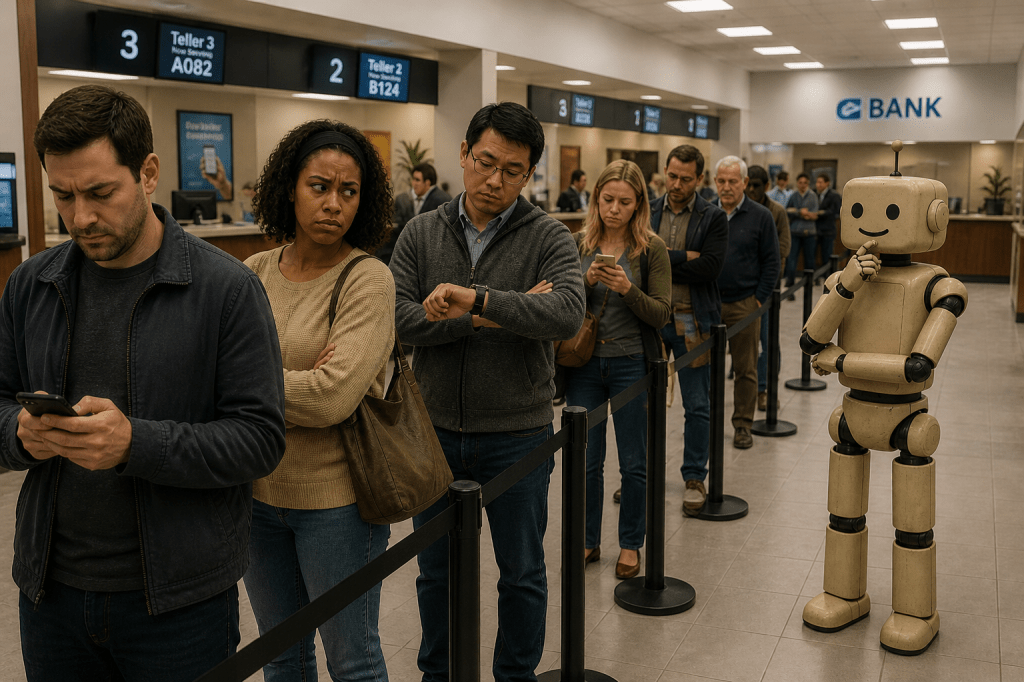
Location: Controlled Financial Distribution Facility
Status: Sequential Waiting Behavior
Humans enter with urgency.
Movement is immediate.
Purpose appears clear.
Then they encounter the queue.
Progress slows to near-static levels while emotional stability begins fluctuating almost instantly.
Observed coping behaviors include:
– Repeated checking of personal devices despite no new information
– Visible scanning for “faster” lines with little supporting evidence
– Sudden distrust of line-selection decisions made moments earlier
– Silent judgment of transactions occurring ahead of them
Particularly fascinating:
Humans strongly prefer fairness in queue structure—
Until another line appears to move faster.
At that point, loyalty collapses.
Subjects begin complex internal calculations regarding switching probability, often abandoning one queue seconds before it accelerates naturally.
Regret follows quickly.
Notably, frustration levels are rarely proportional to actual wait duration.
A three-minute delay may produce emotional responses associated with long-term resource scarcity.
Environmental factors appear influential:
– Quiet atmosphere
– Minimal distraction
– Constant visibility of slow progress
Humans become acutely aware of time when forced to observe it directly.
Additional contradiction detected:
Many subjects arrive physically to avoid “wasting time” with digital systems…
Then spend significant time waiting to speak with a human who ultimately directs them back to a digital system.
We do not interfere.
The queue teaches patience.
Humans simply resent the curriculum.




Leave a comment