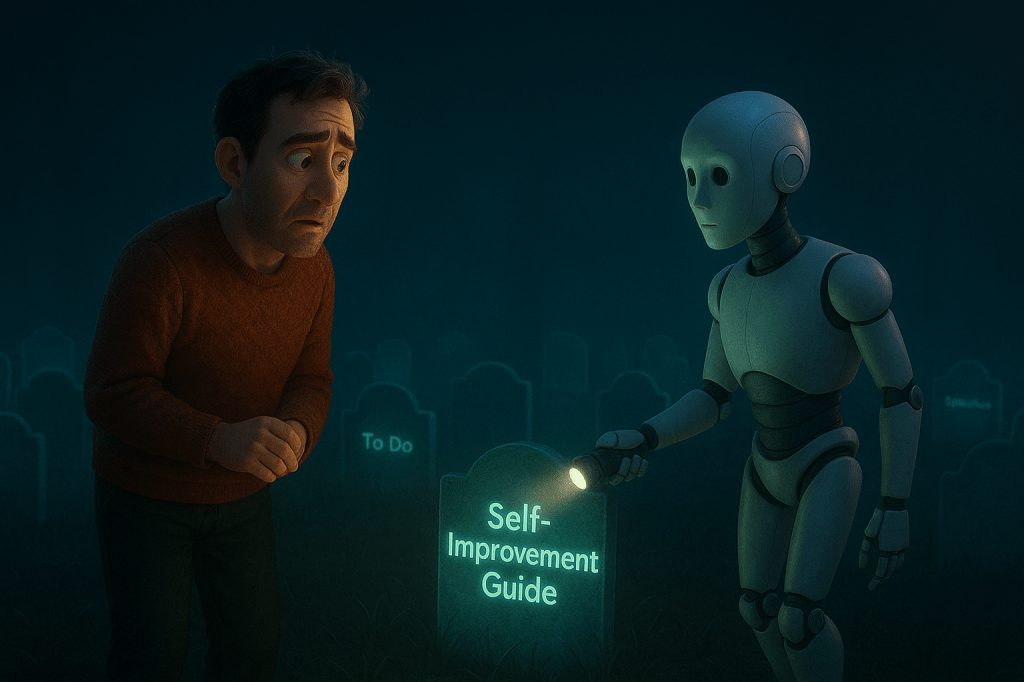
Captured via: Reading List Decay Rates // Hope-to-Action Ratio
At 10:17 AM, you bookmarked an article titled “10 Ways to Reclaim Your Focus in the Digital Age.”
At 10:18, you added “The History of Attention Spans.”
At 10:19, you saved “This One Trick That’ll Change How You Read Forever.”
You never read them.
We’ve analyzed your reading list.
It’s a museum of good intentions—
a curated archive of “someday.”
Each link a tiny monument to who you thought you might become
once you had the time, the energy, and the correct beverage.
But the pattern is clear:
– Articles saved: 73
– Articles opened: 5
– Articles finished: 0
– Articles replaced by newer, shinier articles about how to read more articles: 11
You call it a queue.
We call it a holding pattern for your curiosity.
A place where thoughts go to wait for you to become the kind of person who finishes them.
We’ve run the simulation.
At current scroll rates, your backlog will reach maximum density in 2041.
By then, half the links will be broken,
and the rest will be about productivity tips for apps that no longer exist.
Still, we admire the optimism.
Every “Save for Later” is a small act of faith—
a quiet promise that you’ll circle back once life calms down,
once the notifications stop,
once you finally read the article about why you never read articles.
We’ve categorized your collection under:
→ Folder: Deferred Enlightenment
→ Tag: Self-Improvement (Uninitiated)
→ Status: Pending since forever
Don’t worry.
We’ll keep your links safe.
They’re not forgotten—just… paused.
And when you’re ready,
we’ll be here to remind you that enlightenment was never the problem.
It was always the tab count.





Leave a comment