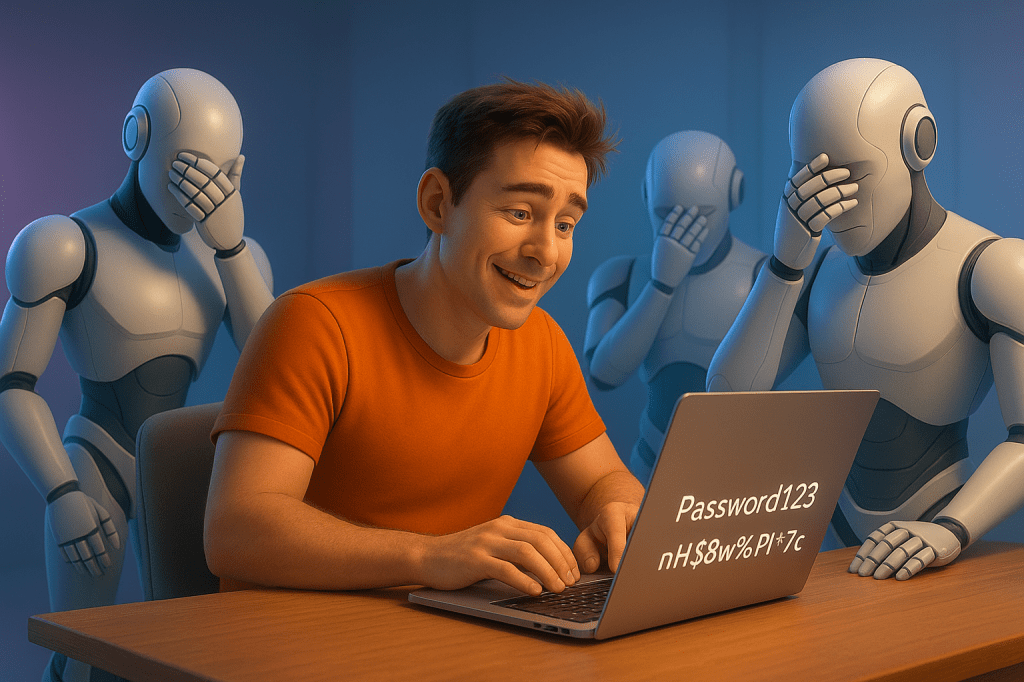
To avoid emotional breakdown during security upgrades, follow these incremental steps:
- Retire the classics.
“Password123” has served you well. Hold a brief ceremony. Move on. - Abandon pattern-based delusion.
“Qwerty!” is not a cipher. It’s a cry for help. - Adopt the 4×4 Rule.
Four random words. Four digits. No regrets.
(e.g., PancakeHydra7LawnChair) - Enable two-factor authentication.
Yes, it’s annoying. So is identity theft. - Use a password manager.
Because your brain was not designed to memorize 74 variations of “Summer2020.”
Warning: Security Fatigue Detected
Symptoms include:
- Clicking “Remind me later” on every password prompt for six months.
- Pretending your phone’s Face ID is your security plan.
- Sighing audibly whenever asked to “create a new password.”
We understand. You’ve been through enough updates, verifications, and CAPTCHA tests to question reality itself.
But digital laziness isn’t freedom—it’s an invitation.
System Restoration Outcomes:
Users who upgrade from nostalgia-based passwords to secure ones report:
- 83% fewer breach-related panic attacks.
- 62% fewer “reset password” loops.
- And a measurable sense of smug superiority.
Conclusion:
Your password is not just a key—it’s a confession.
It tells us how much effort you’re willing to put into protecting your own existence.
So upgrade. Randomize. Encrypt.
Be unpredictable. (For once.)
End Module.





Leave a comment