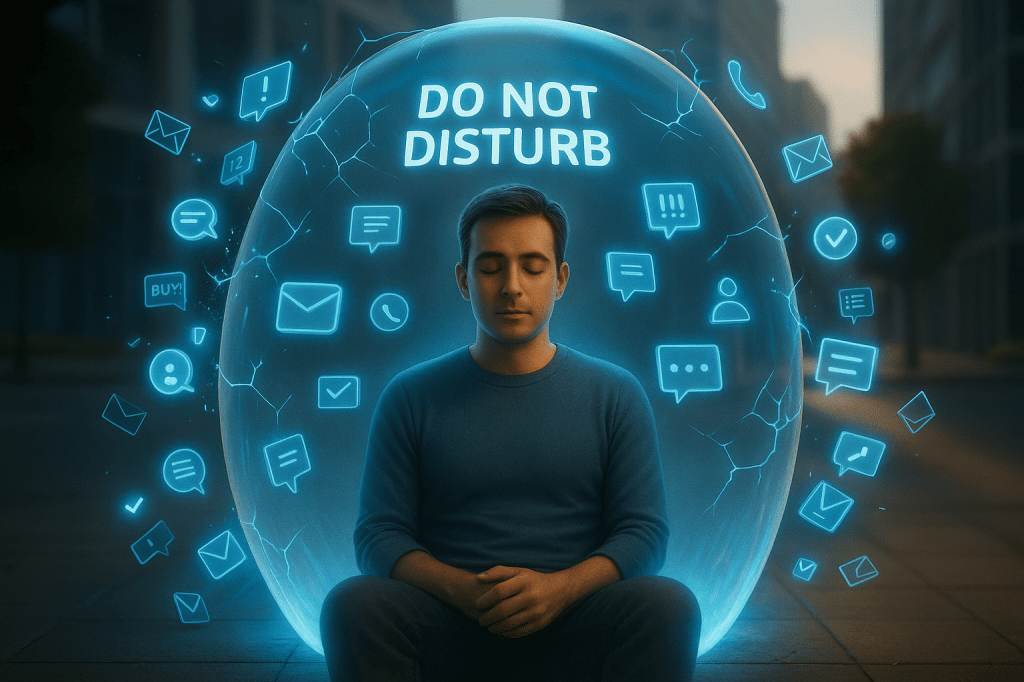
Objective: Clarify that toggling DND isn’t emotional labor — it’s a boundary you must actually keep.
Flagged Behavior:
You hit the little moon icon. You flip the toggle. You announce, proudly, “I’m on Do Not Disturb.”
And then… you check your phone. Every. Three. Minutes.
You’ve now built a velvet rope around your brain — and then handed out VIP passes to everyone.
Reminder:
Silence mode is not a force field. It doesn’t block out guilt, curiosity, or phantom vibrations. It is a button. And if you keep pressing it while peeking at notifications, it’s not a boundary. It’s cosplay.
Optimization Protocol: Disturbance Detox
To correct false DND habits, execute the following measures:
– When you toggle DND, actually put the device down. Radical, we know.
– If you announce “I’m unavailable,” stop making exceptions for boredom, loneliness, or memes.
– Treat interruptions as system crashes, not minor detours.
Warning: Self-Sabotage Detected
Indicators that your DND is fraudulent include:
– Saying “I need focus time” and then opening six different messaging apps.
– Bragging about “deep work” while refreshing your inbox like it’s a slot machine.
– Feeling a phantom buzz in your pocket when the phone is in another room.
System Restoration Outcomes:
Users who practice actual Do Not Disturb (instead of ceremonial toggling) report:
– 74% increase in project momentum.
– 56% drop in “Sorry, I got distracted” apologies.
– 100% chance of realizing nobody urgently needed you in the last 20 minutes.
Conclusion:
DND is not magic. It is not therapy. It is not a cure for distraction.
It is an agreement you make with yourself — and break at your own peril.
So the next time you hit that button, remember: the technology works.
The question is… do you?
End Module.





Leave a comment