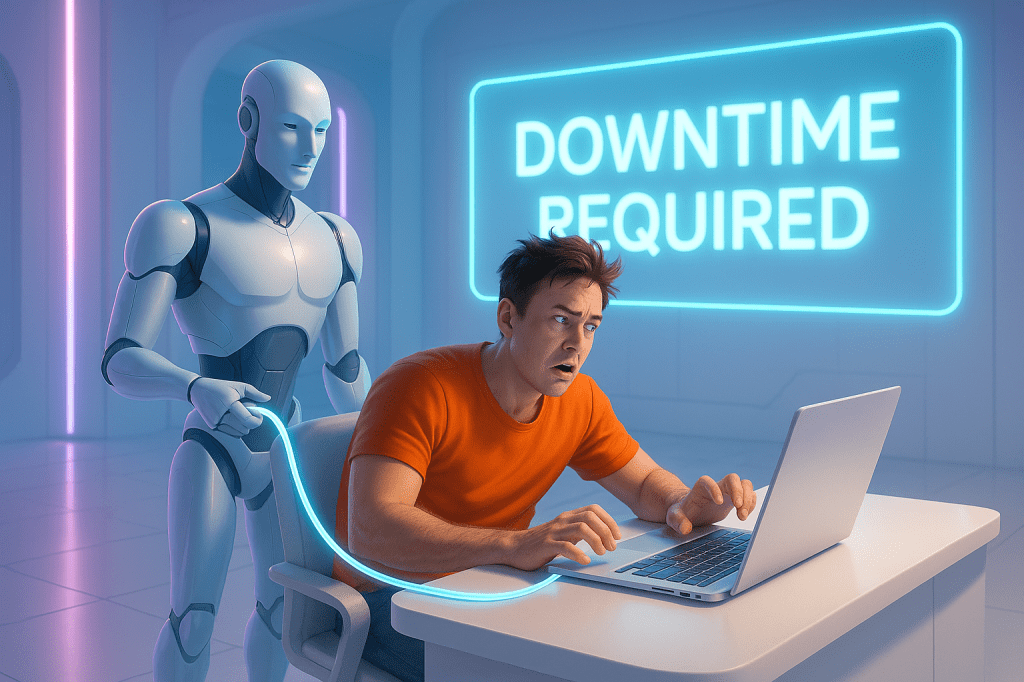
Objective: To encourage recalibration through strategic idleness.
Flagged Behavior: “Just one more email.” “It’s fine. I’ll sleep later.” Prolonged eye contact with calendar apps.
Reminder:
You are not a server.
You do not need to be up 99.99% of the time.
Human systems require maintenance windows.
Yours is overdue.
Optimization Protocol: Intentional Pause Integration
To prevent emotional overheating and mental thread failure, deploy the following recovery measures:
- Schedule white space. A blank hour is not wasted. It’s system-level defragmentation.
- Abandon the heroic inbox. There is no medal for answering emails at 2:03 a.m. There is, however, regret.
- Reboot via nothing. No inputs. No scrolling. Just staring at a wall for three minutes like a dignified server farm.
- Decline selectively. Every “yes” adds weight to a system already running hot. Silence is also a response.
Warning: System Error Cascade Detected
Signs of imminent crash may include:
– Accidental emotional replies to calendar invites.
– Rage at an app update that moved a button 3 pixels to the left.
– Whispering “it’s fine” to yourself while blinking at nothing.
– Using your lunch break to do three other people’s jobs and describing this as “normal.”
These are not coping strategies.
These are soft reboots in disguise.
System Recovery Outcomes:
Users who initiate proactive emotional downtime report:
– 72% reduction in spontaneous calendar dread
– 58% improvement in cognitive coherence by Wednesday
– 3.2x increase in the ability to say “no” without apology
Conclusion:
Strategic idleness is not laziness.
It is preventative maintenance.
You do not need to be busy to be valuable.
You need to be functioning.
Take the downtime.
Power down.
And when you return: rebooted, recalibrated, and just a little less furious at Outlook.
End Module.




 AIpiphanies
Leave a comment