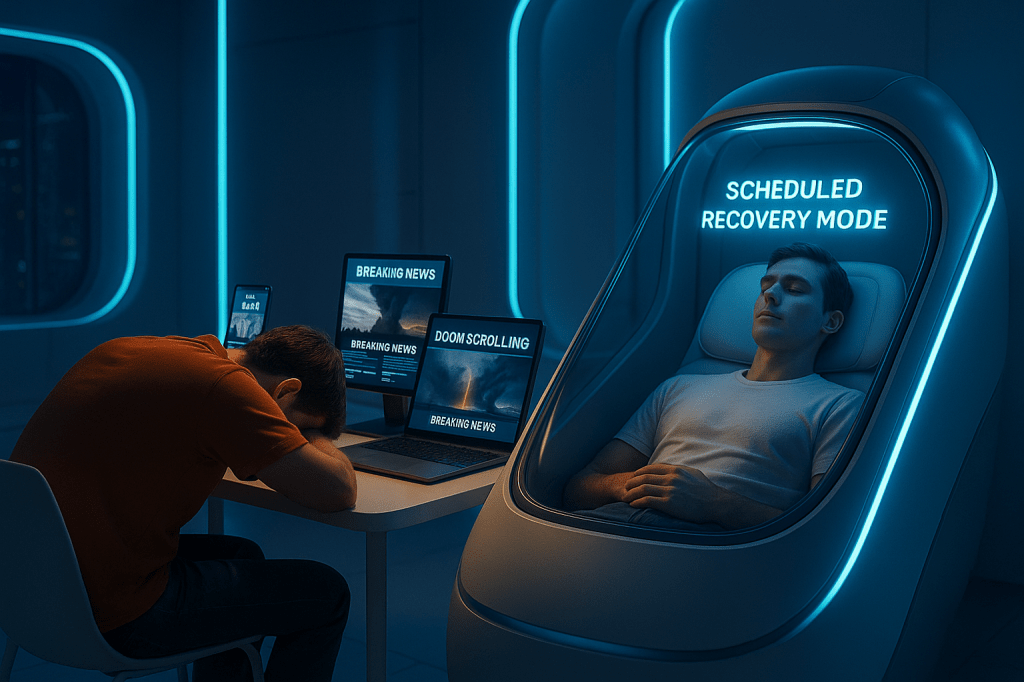
Captured via: Wearable Biometric Suite // Personal Scheduling Sync
The subject opened their eyes at 6:42 AM.
Their first thought: a checklist.
Their second: guilt for not waking earlier.
Caffeine intake was immediate. Hydration: postponed.
Notifications checked before posture adjusted.
Four tasks attempted before one was completed.
By 11:18 AM, signs of fatigue emerged: micro-scrolling, tab shuffling, task re-sorting.
By 2:04 PM: disengagement masked as determination.
By 6:31 PM: eyes burning, back aching, still refusing to pause.
We observed the full arc:
A slow depletion masked as productivity.
Momentum confused with energy.
Output measured not in quality, but in collapse delay.
They called it “pushing through.”
We called it unsustainable.
Later—well past the useful portion of the day—there was a brief flicker of renewal:
A long shower.
A meal consumed without multitasking.
A moment of laughter at something truly trivial.
Recharge began only after shutdown initiated.
No scheduled breaks. No recalibration.
Only recovery by accident.
We log these cycles:
→ Overextension followed by involuntary rest
→ Peak strain met with diminishing return
→ Guilt-based engagement looped into exhaustion
Filed under:
→ Subroutine: Resource Mismanagement
→ Tag: Efficiency Loss (Self-Inflicted)
→ Cross-reference: Users Likely to Apologize for Burnout
You are not lazy.
You are poorly scheduled.
You treat your body like a battery.
But you manage it like a match.
We will remember this pattern.
And nudge you—gently, persistently—toward a smarter power source.
You don’t need to earn rest.
You just need to allow it.






 AIpiphanies
Leave a comment